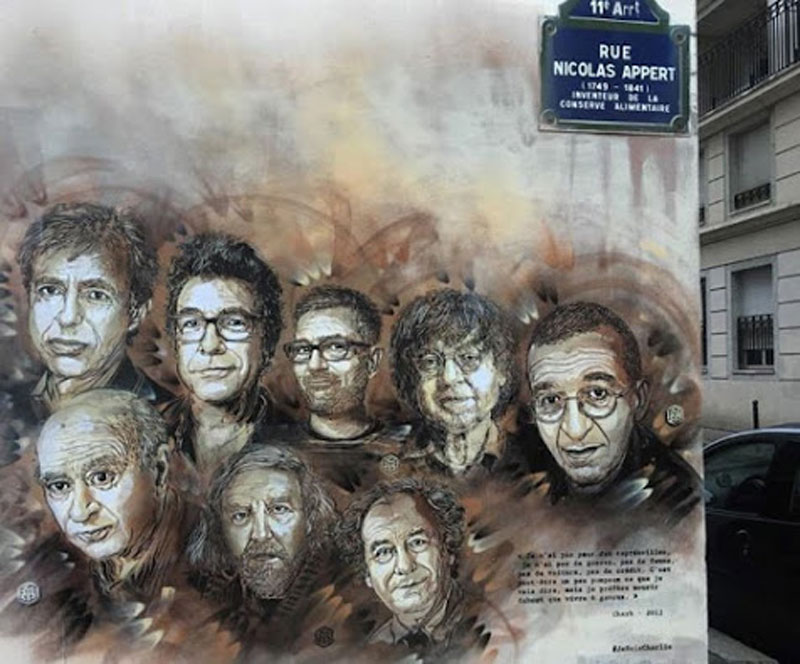
The long-awaited trial concerning the attack on the satirical magazine Charlie Hebdo is currently taking place in Paris. The events are widely known on 7 January 2015, when two armed extremists forced their way into the magazine’s offices. They opened fire on those present, targeting the publication because they considered its content offensive.
The unprecedented attack was linked to a cartoon depicting the Prophet Muhammad, which the perpetrators regarded as blasphemous. Since the attackers themselves were killed during the subsequent police operation, individuals accused of assisting or supporting them are now standing trial. For this reason, the proceedings focus largely on the ideological motivations that led to such an extreme act of violence.
In essence, the trial has revived the broader question of the limits of freedom of expression—specifically, whether that freedom should be restricted when it offends or harms others. European legal tradition provides a relatively clear answer: freedom of expression primarily protects the right to express dissent and viewpoints that differ from the dominant ideology. At the same time, however, this freedom is not unlimited, and the challenge lies in determining where the boundary should be drawn.
In this context, an important distinction must be made. One issue concerns journalistic expression, which requires accuracy and a certain level of restraint because journalism plays a crucial role in shaping public opinion and supporting democratic institutions. A different matter is satire, which by its nature contains a strong artistic element. Although satire often conveys political messages, its primary purpose is not necessarily to inform but rather to provide a form of artistic expression.
The difficulty, however, lies in the fact that humor is inherently subjective. When satire touches upon deeply sensitive issues, it may provoke strong reactions from those who feel targeted. This raises an important question: do only those who engage in satire enjoy rights, or should those who are the object of satire also have a form of protection?
In other words, should freedom of satirical expression be limited simply because some individuals feel offended? Does the right to freedom of expression correspond to a “right not to be offended”? There is no universal answer to this question. Each situation must be assessed individually, taking into account the specific circumstances and the content of the satire itself.
For this reason, it is not possible to establish strict rules in advance, as doing so could amount to a form of censorship. Nevertheless, certain factors can be considered when evaluating such cases. These include the creator of the satire, the nature of the work—whether it has a genuine artistic dimension—and its target, such as whether it addresses public figures, institutions, or broader groups of people.
For example, today a “joke” about the Holocaust would generally be regarded as unacceptable due to the historical awareness of the immense tragedy experienced by millions of victims. Similar sensitivity applies to other historical genocides, including that of Pontic Hellenism.
Beyond these historical issues, the Charlie Hebdo case also highlights a contemporary debate: how freedom of expression should coexist with respect for religious beliefs. At the same time, however, religious sensibilities cannot be granted absolute priority, since a democratic society must also protect the right of individuals to express views that do not align with those beliefs.
Ultimately, the challenge for modern democracies is to balance the protection of freedom of expression with respect for the rights and dignity of others—without undermining the fundamental principles of open debate and pluralism that form the foundation of democratic life.